Showing posts with label Sustainabiity in culture. Show all posts

Sunday, 9 August 2009

Little Aston


From the few articles I have read it seems that the Aston Martin hatch back is not going down very well.  I wonder if there is any genuine problem with the idea on a practical level or whether everyone is either directly (if you do it for a living,) or indirectly (because we live in a marketing society,) just applying some kind of brand extension logic that is a learned set of rules rather than a fundamental anthropological response.  

Yes it does seem strange that Aston Martin would make a hatchback because they trade on selling the unattainable dream.  But this is just a marketing idea.  If we were to place this into a more human context it would probably be like someone we know that has a really aspirational ability i.e. a top chef, deciding to go and work in a chain pub.  Maybe it was because they fell on hard times and needed the cash? Perhaps it would make us doubt the quality of the best they had to offer i.e. if they are willing to lower themselves then why should we expect greatness from them in anything anymore?  But having said this if you put the initial expectations on one side for a minute and think about the realities then it makes you wonder... wouldn't Aston Martin be pretty good at making a hatch back if they put their mind to it.  And wouldn't it be good if more people could experience the Aston craft and expertese without having the money to buy a super car.  And more to the point where I am coming at this from... wouldn't it be better if they found a way to make money out of a product with a lower environmental impact.  

My view is that every brand at some time in the future is going to have to play with the idea of a brand extension that they might at one time have never imagined.  Anyhow to cut a long story short I like the little Aston and would be happy to see more experimental designs from companies that show that they know how to loosen up.

Stumble Upon Toolbar

Thursday, 14 May 2009

MP's expenses and the end of 'behind the scenes' thinking

On BBC1's question time the sense of public contempt for politicians in light of the expenses scandal was pretty clear with derision even for public favourites like Ming Campbell.
 
It struck me that this whole business is a good metaphor for the relationship between companies and sustainability. A perfect example of the notion that there are negative consequences when there is a discrepancy between what you do and what you say. In this instance we all know that people have become disconnected from the political system. There is a general sense that the public face of the politician is not the whole story – that we are being sold some kind of façade or pretence created specifically to meet our expectations but somehow plastic and unreal.  
 
For most of the time this seems to be simply just the way things are and time passes without any great events or drama; just a background disquiet . Then out of the blue a crisis hits where it is revealed that behind the scenes everything is not as it was communicated. In this case we found out that the same politicians who talk to us on a daily basis about moral issues and the way that people should behave are caught taking advantage of their position and acting selfishly without due thought to the broader interests of the people who they represent  or the hard earned cash that they have to give up for the public purse. If only they had thought to ensure that everything that they stand for in front of the camera and on stage was perfectly aligned to the way they conduct themselves behind the scenes! The only rational argument for doing this is a belief that nobody is looking.
 
Corporations can fall foul of the same problem. People already have a general sense that they are selling us one view of themselves while concealing the reality behind closed doors or in far away places. This status-quo can only go on for so long. Every now and again a new issue will reveal practices that are out of sync with public expectations or company promises. When this happens the cost is large and lasting. 
 
The thing that should keep companies on their toes even more than politicians is that public expectations of corporate behaviour are far more changeable than the idea of what is morally acceptable for the political class. Today it might be ok to use certain materials or techniques to bring a product to market that tomorrow will not suffice to convince people that your leadership position is justified.  
 
This expenses scandal could have happened at any time in recent years and the response would have been the same. Keeping ahead of expectations on sustainability proportionately across an entire enterprise  and being open and transparent about this at every stage is a never ending journey. 

Stumble Upon Toolbar

Thursday, 30 April 2009

Mapping behaviour change e.g. Zappos

This is a mapping application created by Zappos using google maps.  Every time someone buys a product the model flashes up on the map over the place where it was bought.  Wouldn't it be good to see something similar for carbon savings.  Every time a person or a company manages to reduce their energy use or meets a target they get a little credit through a tag on the map.  Zoom in further and you would be able to see who is making a difference on your street or your highstreet.  If sustainability is about behaviour change its worth remembering that people definitely start to act differently when they are in front of the eyes of the others.  A few people have been suggesting this to google and they have said that people should do it themselves for now.  Lets hope they have something up their sleeve.  After all lets face it the business model couldn't be that hard to crack!  

Stumble Upon Toolbar

Monday, 27 April 2009

Reciprocal Altruism... A new golden rule for marketing

Sounds a bit lofty but could be the answer to something that I have been trying to resolve for a while now. Its an idea that is used to explain the notion that humans are innately moral in some way. In simple terms the phrase ‘do unto others as you would want done unto you,’ which is the original golden rule gets the idea across. If I do something good for you then there is more chance that you will do me the same or some other favour in return. In a meeting of religious faiths which brought together representatives from all of the key religions this was the one principle that everyone was able to agree on as the common ground.  

Brain research has also shown that our process for judging our own behaviour involves a step which blurs the line between the person having the thought and the person who might have to deal with the consequences of their actions - in other words before acting we put ourselves in the position of other people to judge how we would feel if the situation was switched e.g. taking something without asking or making a decision that affects others without consulting them. All of this says that there is some kind of original physiological and cultural predisposition to show empathy and respond to empathy from other people.  

Anyhow the problem I was toying around with was the belief that a lot of people have about sustainability as a marketing tool. There is no question that active consumer interest in products and brands who tick more of the ‘ethical’ boxes is on the rise. But despite this there is a large percentage who are not actively choosing brands on these grounds; they are aware and sympathetic about the issues but they are not doing anything about it. Instead of seeing this as an opportunity to make ‘green’ easy for the current spectators many people would argue that this proves that there is no great demand and we therefore do not need to pursue it.  

This is where the idea of ‘reciprocal altruism’ comes in. For if you know that something is in someone’s or everyone’s interests then would you only do it if you knew that they were  actively calling out for it? Going beyond people’s expectations is often what is required to trigger a positive response from someone that they were not expecting to give. I have been a big proponent of consumer centric planning which is basically the idea that marketing should seek to give people things that they actually want. But if you restrict yourself to this then you might miss out on being more than they hoped. Now I would put forward a new idea based on a strategy of reciprocal altruism... lets call it ‘marketing kindness.’ An idea to explain acting for peoples interests as if they were your own rather than giving people whatever they will swallow fastest or easiest. Not because it feels nice to do it but because people are predisposed to respond positively to this kind of action. It builds a sense of trust and community and is likely to be reciprocated in some way - all things that companies are looking for.

For example Dove would not have been able to prove that the goal of building women’s self esteem was an expectation that women placed on brands in the category by simply asking people outright. In research I expect it might have come out as a nice to have rather than a big idea. But over the years it has worked for them incredibly well and has translated into sales success.  

Likewise Cadburys are about to go fair trade on every single product that they make. I am almost certain that in consumer research people would not say that fair trade was a pivotal factor in their purchase of chocolate. Lets see how it goes but I predict that there will be a positive ‘reciprocated response’ that goes beyond what they would have been able to determine in advance. 
 
Looking at it like this sustainability is not about ‘doing your bit’ its a strategy of taking a leap of faith to inspire people to believe in what you are doing rather than relying on simply taking the order of the day as gospel.  

Stumble Upon Toolbar

Wednesday, 22 April 2009

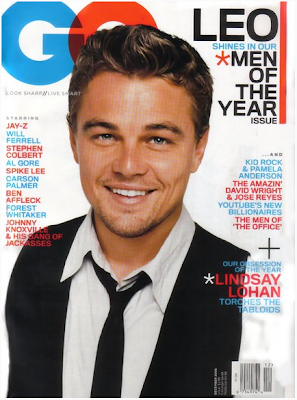
Brand Leo...


“Brand” is one of those words that loses its meaning sometimes. It seems like it constantly needs revisiting for a definition of what it actually is. Maybe it’s to do with it being conceptual idea related to popular culture that is always on the move like ‘style’ which has a slightly mobile meaning. Or that it has a value attached to it.  Companies have to protect the idea that their brands have a quantifiable value, meaning that it’s an idea that needs upkeep like the word capitalism itself. I was reading ‘Creative capitalism’ which was a debate style book where Bill Gates’ concept of the same name was being interrogated. Lots of economists were arguing passionately about the need to maintain the purity of the profit motive of companies and that it was wrong to muddy the waters by confusing this with altruism. Maybe the advertising industry is to the word brand, what establishment economists are to the word capitalism i.e they have a vested interest in cultivating its meaning. What’s funny is that sustainability thinking offers clarity to a lot of the issues that branding is trying to work out since it realised that a lot of the old ideas need updating. In other words sustainability has helped me understand what brands really are. And so here you have it, no fanfare required…

“A brand is what people think about the things that you do.”

Pretty basic really. When people talk about your personal brand – they mean nothing more than this… what people think about the way that you conduct yourself and what they interpret from this about who you are and ultimately if they like you. Calling it a ‘BRAND’ does not change this even though it gets used in a way to suggest that it should. In fact if this notion that on one level everything is a brand did mean something it would mean something negative i.e. Looking after your brand would probably mean managing people’s perception of you regardless of how you really are. This is basically the assumption that has been made by advertising and marketing since they existed as independent departments and businesses. The idea that the perception of a brand can be created as whatever you want it to be regardless of what else is going on in the broader company. This is not saying that marketing and advertising is not necessary – the company needs a voice and it needs to get heard. It is the idea that the voice is disconnected from everything else and can basically be the mother of its own invention that is shaky. If that was the case then you could not really explain away why it makes sense to build your brand in simple common sense speak. It would probably be something like…

‘Brands are something that companies create to give the appearance that the products that it sells are more interesting or attractive than they actually are. ‘

Logic would say that if you chose this definition then you would also end up thinking that actually this was not sustainable (in the enduring sense) for very long and would probably end up opting for a strategy of actually trying to become more compelling as a company in the way you go about doing things and hope that this would rub off.  This is basically what sustainability thinking wants you to conclude. If a brand is what people think about what you do then you focus on that.  

Which in a long winded way brings me to the point of the post which is an example of this at work. ‘Brand Leo’ (not Leonardo Di Caprio these days apparently,) is nothing more complicated than what people think about the things that he has done. This means massive movies that will put off some cultural elites but also includes some with real merit. A string of super model girlfriends which commands respect from the ex-teenager inside men and from what I can tell does not seem off-putting to women. Then there’s how he comes over in real life situations such as interviews – do you come away thinking funny, big ego, boring, takes himself too seriously, insincere, smart?  Well from the couple of times I have seen him he seems to come over pretty well - articulate, passionate but also strikes up a rapport with the interviewer, seems to be ‘being himself.’ Of course all of this could fall to pieces if a Christian Bale like outburst  (remix,) at one of the on set minions emerged but so far it seems to be genuine. So a pass on most measures or 'a strong brand' some might say.

There is however another part to his ‘brand’ which is his vocal support and the time that he has dedicated to supporting awareness of climate change.  If this was just talk or he did not really seem to understand the issues then this would look like spin or tokenism but the commitment needed to get a film project off the ground suggests that you can judge on actions alone. And so what do people think of it? It makes us understand that he is smart and cares about larger issues i.e. a capacity for empathy. And rightly this makes his ‘brand,’ if you want to call it that, stronger. It gives additional strings to his bow outside of teenage girls by having something to say to more enlightened audiences. It also maybe even makes him more capable of being taken seriously which is a big challenge for the leading man with artistic ambitions. And of course the teenage girls like him even more for it. Maybe they do not understand all of the issues but they definitely approve. Would they choose a Leo film over a Brad Pitt film based on sustainability credentials alone – probably not, and if you asked them in a survey it would not register. However the extra notice that they took when they watched his environmental film did make them feel good and some of it might just have sunk in.  

So currently its working well for Leo but the important point is that he could not have done it in the sense of a ‘branding’ exercise if that means through perception creation and manipulation… he had to mean it. So in actual fact its as simple as ‘doing things that are worthy of credit.’ Don’t let branding detract from a simple truth. People, celebrities, corporations, its all the same.

Stumble Upon Toolbar

Monday, 30 March 2009

The age of stupid

Went to see this over the weekend. It’s the most memorable film in the environmental education genre that I have seen as it manages focus on real human stories while still creating a big picture by piecing them together like bits of evidence for some kind of post apocalyptic research project. There is a huge task to bring to life the physical implications of the science without making it seem like science fiction… ‘The Day after tomorrow,’ springs to mind. Climate change can’t become a bogyman it needs to feel as real as today’s news even through some of the implications seem like some kind of Hollywood alternative reality.

Also liked the marketing. I am now armed with stickers to brand the world around me as STUPID or NOT STUPID. In West London you have to go further for the latter than the former.

Stumble Upon Toolbar